
ACME CorporationSmart Home Services
A Phoenix-based smart home services company with 15+ years in the business needed to modernize three things at once: how its sales organization operated at the leadership level, how its door-to-door reps worked in the field day to day, and how its own customers experienced the system after installation. We built all three.
- Industry
- Smart Home Services
- Platform
- Web, iPhone, iPad, Android
- Scope
- Door-to-door sales, smart home services

Reps in the field had it worse.
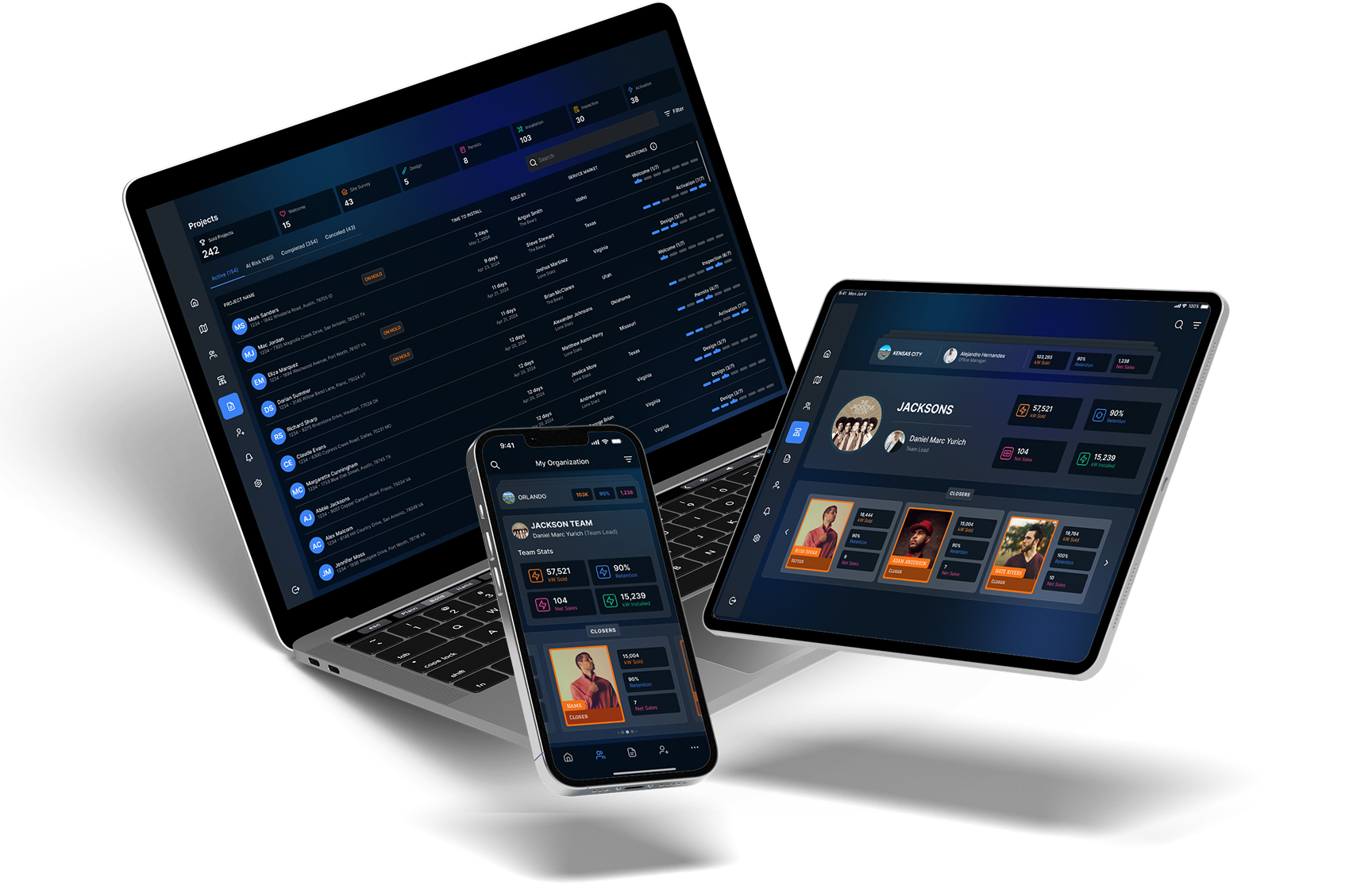
Door-to-door sales ran on disconnected tools and manual processes - leads were hard to track once a rep moved on to the next door, appointments got missed or double-booked, individual performance was hard to measure beyond a gut sense of who was working hard, and sales documents ended up scattered across email, text threads, and whatever app a rep happened to prefer. Managers had limited visibility into what was actually happening in the field day to day, and reps spent more time managing their own workflow - chasing paperwork, checking calendars, hunting for a document - than actually selling.
One app for the rep working the door.
For reps working the field, we built the Rep App, giving them everything they need to manage and grow their door-to-door sales without falling back on a notebook or a group chat. Reps identify and track leads as they work a neighborhood, keep contracts and sales documents organized in one place instead of scattered across email and text, and see their own KPIs, appointments, and pipeline activity through individual rep profiles - so a rep can tell exactly where they stand without waiting on a manager to pull a report. That same visibility runs both ways: managers see performance and field activity in real time instead of finding out at the end of the week. Its Live Scheduling feature gives everyone a clear view of each rep's schedule - available and busy time slots alike - so reps can find an open slot and book an appointment directly, with the system itself preventing double-booking rather than just flagging the conflict after it's already been scheduled.

Once the system was installed, homeowners lost visibility too.
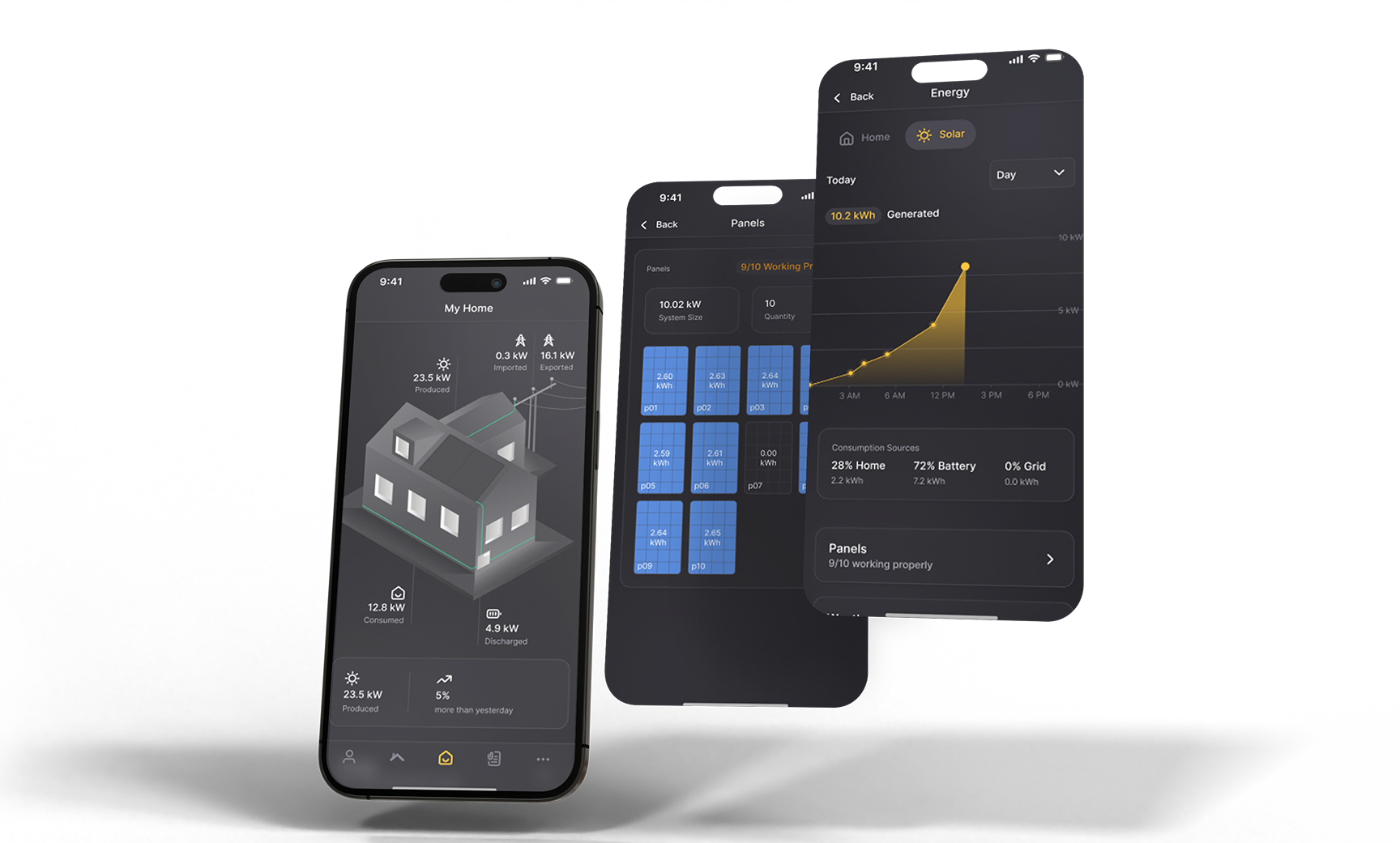
Once a homeowner signed and the system went in, the visibility problem just moved to them. Project updates, milestones, and technical information were scattered across phone calls, texts, and whatever the installer happened to mention on-site, with no single place for homeowners to check progress themselves. After installation it got harder rather than easier - no clear way to check on device status, activity, or alerts once the system was actually live, which meant every question turned into a phone call to a company that had already moved on to the next job.
One app for the homeowner after the sale.
For homeowners, we built a separate Homeowner App giving a real-time view of the whole job, from the first steps of installation through everyday life with the system running. During installation, homeowners track progress against real milestones instead of waiting on a phone call for an update. Once the system is live, that same app shows device status, activity, and alerts in real time, so a homeowner knows what's happening with their own system without needing to call in and ask. Homeowners can also invite family members into the app, giving them the same visibility into installation progress and, later, day-to-day system activity - useful in a household where more than one person wants to keep an eye on things.
The company's website also runs on FlintAI, our AI customer interaction platform, handling inbound chat and lead qualification on the site itself.

The leadership team had no visibility across regions, offices, or teams.
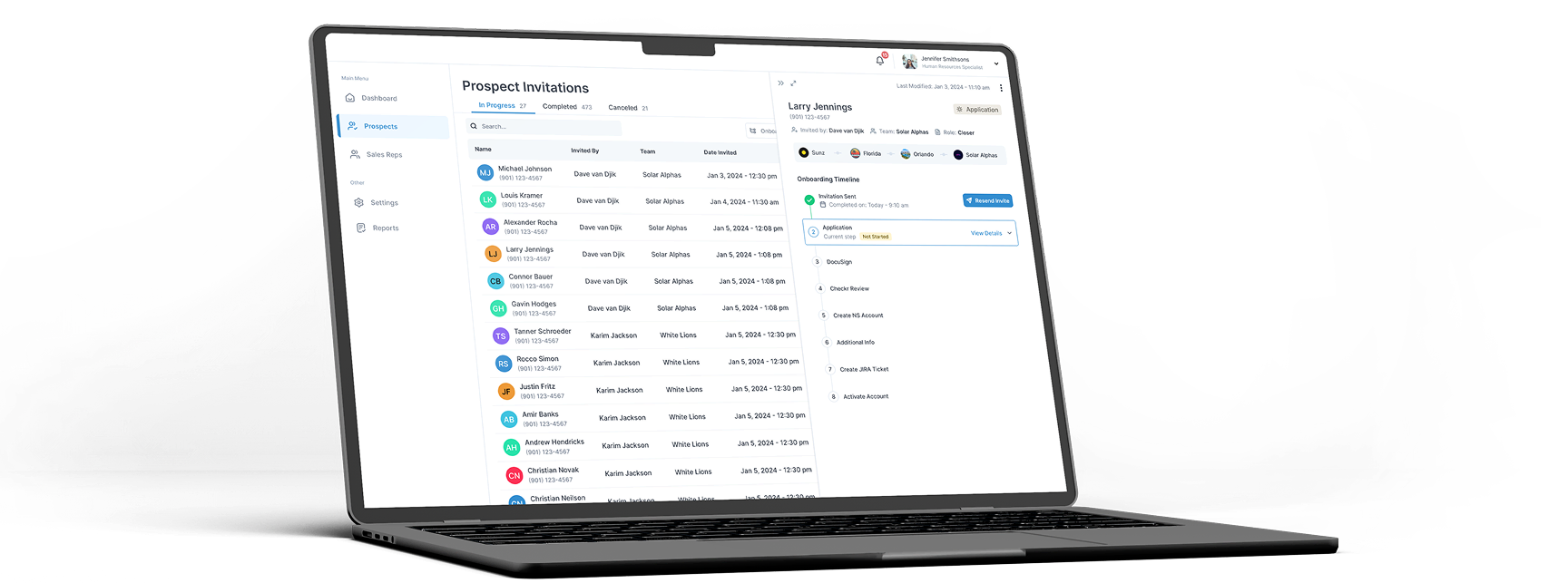
The company lacked visibility across regions, offices, and teams - leadership could tell revenue was growing, but not which offices were actually driving it or which ones needed help. Individual rep performance was hard to track without pulling reports by hand, lead generation and sales management ran inefficiently, onboarding for a fast-growing team was manual and slow enough to become its own bottleneck, and territory management and canvassing had no real system behind them beyond local knowledge and good intentions.
One dashboard for every region, office, and team.
We built a leadership platform giving regional, office, and team visibility through a single dashboard, with performance leaderboards that make it easy to see who's closing and who needs support before a bad quarter turns into a bad year. An HR portal streamlines hiring, applications, background checks, and IT requests, cutting the manual back-and-forth that slows down onboarding for a sales force this size. A territory management tool with Google Maps integration assigns canvassing zones so reps aren't accidentally working the same doors, while property data - owner names, home size, values - feeds targeted lead generation instead of leaving reps to canvass blind. An integrated proposal tool connects directly to that lead data rather than living apart from it, and CRM integration ties the whole system together so nothing gets entered twice.
400+ reps onboarded at the top, one app for the field, one for the homeowner.
In its first four months live, the HR portal onboarded over 400 new sales reps and the territory management tool mapped 1,400+ territories, while reps working the Rep App knocked 150,000 doors and scheduled 1,600 appointments. Leadership got the regional and team visibility it never had, reps got one place to run their day instead of stitching together disconnected tools and spreadsheets, and the Homeowner App gave customers the visibility, control, and confidence that used to stop at the sales team the moment the contract was signed.
Have a project in mind?
Tell us what you're building — we'll reply within one business day.